
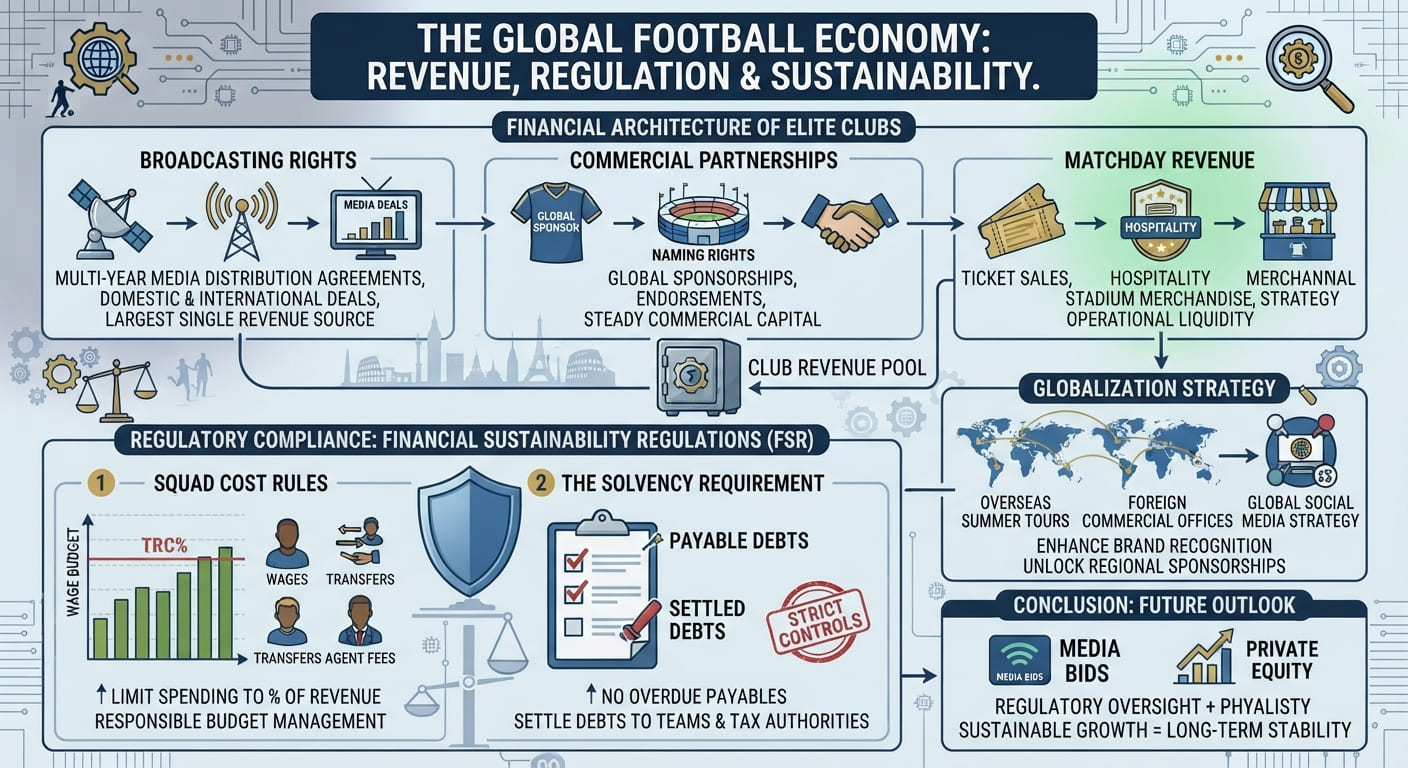
Modern international football has evolved into a multi-billion-dollar global industry, driven by massive broadcasting deals, lucrative sponsorship contracts, and strategic commercial expansions. As top European clubs generate unprecedented annual revenues, governing bodies face the complex challenge of balancing financial sustainability, competitive balance, and strict regulatory compliance across major international competitions.
Key Revenue Streams Powering Modern Clubs
The financial architecture of elite football clubs relies on three primary commercial pillars:
- Broadcasting Rights: Multi-year domestic and international media distribution agreements remain the largest single source of income for top-tier competitions.
- Commercial Partnerships: Global jersey sponsorships, stadium naming rights, and brand endorsements provide steady commercial capital.
- Matchday Revenue: Ticket sales, hospitality packages, and stadium merchandise generate crucial operational liquidity.
Financial Fair Play (FFP) and Sustainability Regulations
To prevent clubs from overspending and entering unsustainable debt cycles, UEFA introduced Financial Fair Play regulations, which have now transitioned into the Financial Sustainability Regulations (FSR). Key enforcement mechanisms include:
1. Squad Cost Rules
Clubs are required to limit spending on player and coach wages, transfers, and agent fees to a strict percentage of their total club revenue, encouraging responsible budget management.
2. The Solvency Requirement
Strict controls are placed on overdue payables, ensuring clubs settle debts to other teams, employees, and tax authorities in a timely manner.
The Globalization of Club Football
To capture international markets, major clubs frequently schedule overseas summer tours, open foreign commercial offices, and leverage global social media strategy. This expansion enhances worldwide brand recognition while unlocking new regional sponsorship opportunities.
Conclusion: The Future of Football Economics
As streaming platforms enter media rights bidding wars and private equity firms invest in European leagues, the business of football continues to transform rapidly. The long-term stability of the sport will depend on effective regulatory oversight combined with sustainable commercial growth.